A day in an Italian bar
The Italian bar is a cultural institution, a place where people socialize, have business meetings or a romantic date, watch a “calcio” match on TV or simply have a quick espresso for resetting their mind. Let’s see what people drink and eat during the day inside a typical Italian bar.
6am – noon
Most Italian bars open between 5 and 6am, when people wake up and commute to work. The Italian breakfast isn’t as rich as the British or American one. At home, people usually have a caffè latte, a simple coffee and milk in a bowl, with biscuits or fette biscottate, sliced toasted bread with jam or honey. In any Italian bar, you see customers lining at the counter or “al banco”, having a cappuccino e brioche, a simple cappuccino with a pastry. If you want an orange juice, you may want to try the spremuta d’arancia, freshly squeezed oranges. Some people take it easy and sit “al tavolo”, at the table, reading the daily newspaper, il quotidiano. The Italian breakfast though is usually fast.
There are few different types of pastry, but the most common one is the croissant. In northern Italy we use the French word brioche and in central-southern Italy we call it cornetto, from the word corna, horns. It can be filled with cream, cornetto alla crema, jam, cornetto alla marmellata, or chocolate, cornetto al cioccolato. The colazione goes on until 10, when the last few people have breakfast at the Italian bar before heading to the office.
Then many Italians take a break in the middle of the morning for the so called pausa caffè, coffee break. In every city it is common to see people dressed in suits or groups of workers having an espresso, in Italian simply called caffè. After 11, having a cappuccino is considered unusual, because it’s really a breakfast drink. The morning rhythm of an Italian bar is fast: people order at the counter, drink in two minutes and leave a coin on the saucer. If you are just starting Italian, our guide to the Italian alphabet is a good first step before ordering at the bar.
Use the spacebar to pause the audio.
BREAKFAST – COLAZIONE
- la brioche: the pastry / croissant
- alla crema: with cream filling
- alla marmellata: with jam
- al cioccolato: with chocolate
Noon to 6pm
Of course you can have lunch in any Italian bar. There are two main categories of bars serving lunch. If you want to practice the language of restaurants and ordering, see also our guide on eating out in Italian.
Tavola fredda literally “cold table”, is a bar serving only cold food like panini, the famous Italian sandwiches, affettati Italian cured meats like prosciutto and salame; insalata the Italian salads, including insalata di riso and insalata di pasta, cold pasta and rice with pickled vegetables, tuna and other ingredients. Tavola fredda is a good place in summertime, for a fresh and quick meal.
Tavola calda, “hot table”, is a bar serving some hot food, in addition to cold dishes normally available at lunch, mainly primi piatti like pasta, risotto, lasagne, parmigiana di melanzane etc. A tavola calda bar is usually bigger than a tavola fredda, because they have a small kitchen, but it’s still a bar. So, the food you get in a tavola calda is good for a quick lunch, but normally not as good as a trattoria or an osteria, typical small local restaurants. This is not a rule of course. You can find good Italian bars and bad trattorias.
Both tavola calda and fredda usually propose a menù fisso, a fixed price menu with a dish or two, with coperto (bread and service), bevande (drinks) and a coffee. Tutto incluso! All included.
After lunch, it is always time for a caffè. That’s important if you want to have a productive afternoon!
After lunch, barmen, i baristi, get ready for the afternoon and evening drinks, l’aperitivo.
LUNCH – PRANZO
- la tavola fredda: the cold-food counter
- il panino: the sandwich
- gli affettati: cured cold cuts
- l’insalata: the salad
- la tavola calda: the hot-food counter
- i primi piatti: first courses (pasta, rice)
- il barista: the barman / bartender
- il menù fisso: the fixed-price menu
- l’insalata di pasta: cold pasta salad
- il coperto: bread and service charge
- le bevande: the drinks
- tutto incluso: everything included
Evening
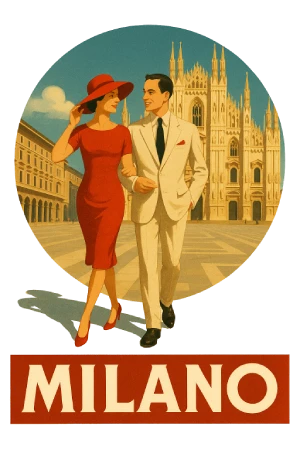
The city of Milano is nicknamed Milano da bere, a city to drink, because it is very famous for the evening aperitivo. The aperitivo is a meeting with friends and colleagues after the office hours. The aperitivo is not just drinking time. Food is everywhere and it’s free. Aperitivo is popular in Italy, but in Milano it is so common and the competition so fierce that customers can eat for free almost everywhere. If you order a drink at the Italian bar, you can help yourself with free stuzzichini, appetizers. The aperitivo is also a good moment for making new friends in Italian.
We are not talking about peanuts (noccioline) and chips (patatine), but small panini, pasta, rice, vegetables and dips, meatballs, and other finger food. At the end of the aperitivo, it is often not necessary to go home and have dinner. People stay out for a couple of more drinks and enjoy free time with their friends. Everyone wins!
Italian bars in small cities usually close around dinner time. After the aperitivo, people go home. Bars serving the aperitivo in bigger cities usually stay open until 2am.
Milano is the city of Campari, Torino of Martini, Venezia is home to Spritz cocktail and Prosecco sparkling wine, nothing to envy to French champagne. As a matter of fact, Prosecco is now more sold than Champagne in North America and other countries.
APERITIVO
- l’aperitivo: the pre-dinner drink
- gli stuzzichini: the free appetizers
- Milano da bere: “Milan to drink” (aperitivo culture)
- il campari: Campari, the red bitter liqueur
- il martini: Martini vermouth
- lo spritz: Spritz cocktail (wine + Aperol + soda)
- il prosecco: Prosecco sparkling wine
- noccioline: peanuts
- patatine: chips / crisps
Historic bars across Italy
Every region has its own historic Italian bar. Below is a short city-by-city map of places that are still open today. Dates and addresses are kept short and factual.
- Milano: Pasticceria Marchesi (1824), one of the oldest pastry shops in the city. Camparino in Galleria (1915), inside the Galleria Vittorio Emanuele II, historically linked to the Campari family.
- Venezia: Caffè Florian (1720) in Piazza San Marco, one of the oldest cafés in continuous operation in Italy. Harry’s Bar (1931), near San Marco, where the Bellini cocktail was invented.
- Roma: Antico Caffè Greco (1760) in via dei Condotti, a meeting point for writers and travellers like Goethe, Stendhal and Casanova. Sant’Eustachio Il Caffè, near the Pantheon, famous for its espresso.
- Napoli: Gran Caffè Gambrinus (1860) in Piazza del Plebiscito, often associated with the tradition of the caffè sospeso, the “suspended coffee” paid for a stranger.
- Padova: Caffè Pedrocchi (1831) in via VIII Febbraio, known as “il caffè senza porte”, the café without doors, because for many years it stayed open day and night.
- Bologna: Osteria del Sole (1465) in vicolo Ranocchi, one of the oldest taverns in Italy; people bring their own food and order only the wine. Not a bar in the modern sense, but part of the same drinking culture.
- Firenze: Caffè Rivoire (1872) in Piazza della Signoria, famous for its hot chocolate. Caffè Gilli (1733) in Piazza della Repubblica, one of the oldest in the city.
- Genova: Antica Confetteria Pietro Romanengo (1780) in via Soziglia, a historic shop for confetti and pasticceria.
- Torino: Caffè Al Bicerin (1763), in Piazza della Consolata, home of the bicerin, a hot mix of coffee, chocolate and cream.
- Palermo: Antico Caffè Spinnato in via Principe di Belmonte, a classic stop for granita, brioche and cannolo in the historic center.
Each Italian bar in this list is more than a place to drink: it is part of the social history of the city. If you travel, try at least one of them and order something simple at the counter.
In Sicilia, in the small town of Savoca, the Bar Vitelli became famous because of the movie “The Godfather”. Today tourists visit this Italian bar to see the same room of the film and to taste a granita with brioche, a typical Sicilian breakfast.
Regional drinks at the Italian bar
Italian bars also change with the region. In Veneto, in the late afternoon, people order a Spritz: white wine, Aperol or Campari, and sparkling water. It is orange, fresh and not too strong. In Toscana, many people drink a small glass of red wine before lunch, with a slice of bread. In Napoli, the coffee is short, hot and very strong: the caffè napoletano is famous all over Italy.
In summer, in any Italian bar you can ask for a caffè shakerato, espresso with ice and sugar, mixed in a shaker. In winter, people order a cioccolata calda, a thick hot chocolate that you eat almost with a spoon. The menu of an Italian bar is simple, but it follows the seasons and the local habits.
PAROLE UTILI – USEFUL WORDS
- cioccolata calda – hot chocolate
- succo di frutta – fruit juice
- barista – barman
- tè – tea
- senape – mustard
- prenotazione – reservation
Test your understanding
A short quiz to check your grasp of italian bar vocabulary.
–
We hope this article about the typical Italian bar will be useful. Enjoy your holiday and book a Skype class with a native teacher.
Ready for the next step?
All our classes are live on Zoom with a native Italian teacher, in small groups. If this lesson matches your level, take it further with real practice.

Milano A2-B1
Small group course · live on Zoom · native teacher
Move from the basics to real conversations, step by step, with a native Italian teacher who keeps the group small and the pace right for you.
- Small groups, max 4 students — weekly live Zoom lessons
- Grammar, vocabulary, listening and writing in every cycle
- Materials in Italian + English, beginner-friendly
- Homework after each lesson, corrected by your teacher
Individual classes
One-to-one · any level · live on Zoom
Private lessons with your dedicated native Italian teacher, fully tailored to your goals and schedule, from absolute beginner to advanced.
- 55-minute individual Zoom lessons, your dedicated teacher
- Personalised level assessment included
- Interactive online materials — homework after each lesson
- Flexible weekly schedule or pay-as-you-go package